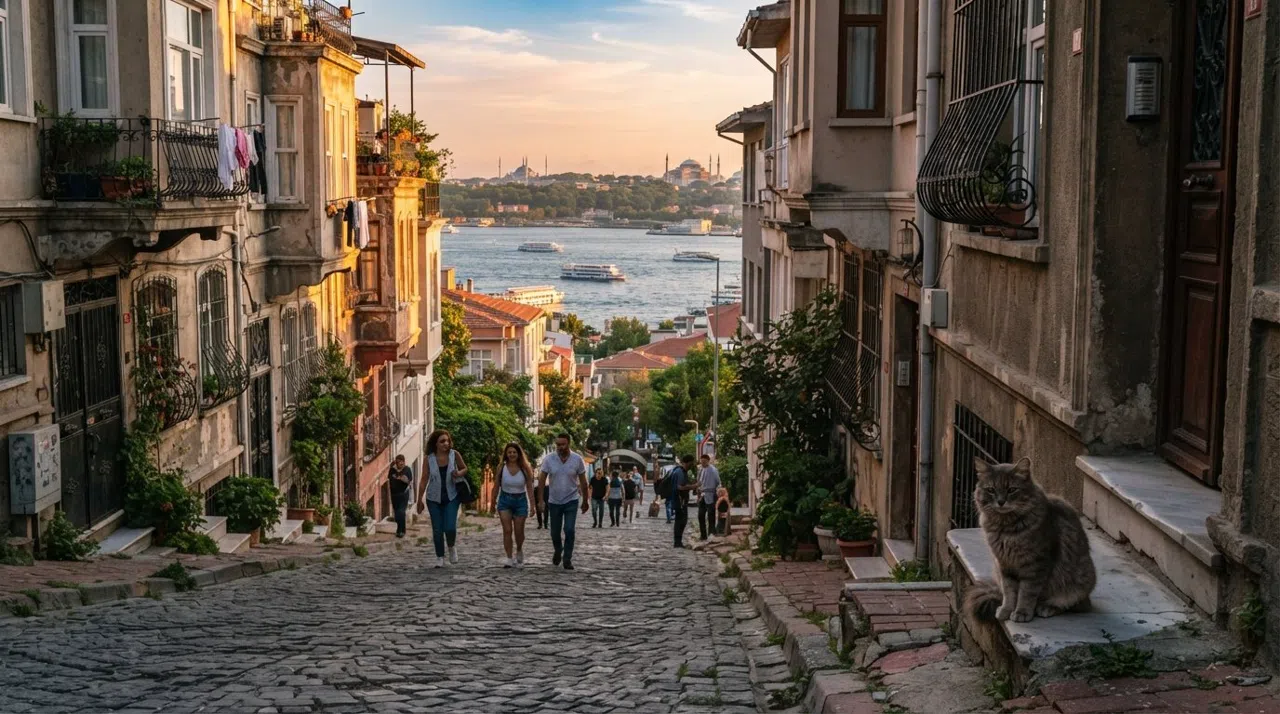
Climb the stairs off Sıraselviler and the city changes its clothes. Two minutes above Taksim’s hard noise, the apartment blocks go nineteenth-century and pastel-faded, balconies sag with jasmine, and cats doze on windowsills as if they pay rent. Cihangir and Çukurcuma are the sort of neighbourhoods that make Istanbul feel conspiratorial: one minute you are in the commuter churn, the next you are on a steep lane where breakfast can last until lunch and nobody is in a hurry to object.
What Cihangir & Çukurcuma are known for
This is Beyoğlu at conversational volume. Cihangir sits higher and leafier, arranged around the little green pull of Firuzağa Mosque, with café tables, gossip and coffee cups doing most of the urban planning. Çukurcuma drops away downhill toward Tophane and becomes another thing entirely: Istanbul’s antiques district proper, a tangle of lanes where more than a hundred dealers crowd around Çukurcuma Caddesi and Faik Paşa Yokuşu, opening their shopfronts late enough that morning can still be considered an insult.
The neighbourhood’s mood is bohemian without pretending to be young. Writers, actors and expats arrived in the 1970s and never really left; now the place runs on first-name terms and the soft confidence of people who have already decided they like where they live. It is affluent, yes, and faintly self-aware, but it is also lived-in in the useful sense: laundry on balconies, school bags on the stairs, someone arguing gently over tea. The comparison to the Left Bank or the Marais gets rolled out often enough to have become part of the furniture. Residents roll their eyes and order another coffee.
And then there are the cats, which in Cihangir are less a motif than an infrastructure. They are fed, doctored and generally accommodated by the whole street; you will share your table, and possibly your plate, with at least one. That is not a gimmick here. It is simply how the neighbourhood breathes.
The single most famous address is the Museum of Innocence, Orhan Pamuk’s small and melancholy cabinet of everyday Istanbul life. It sits in a nineteenth-century Çukurcuma house and gathers the kind of objects that normally vanish without anyone noticing: matchbooks, teacups, cigarette ends, fragments of domestic time from the 1950s to the 2000s. It is open Tuesday to Sunday, roughly 10am to 6pm, and closed on Mondays.
Where to eat & drink
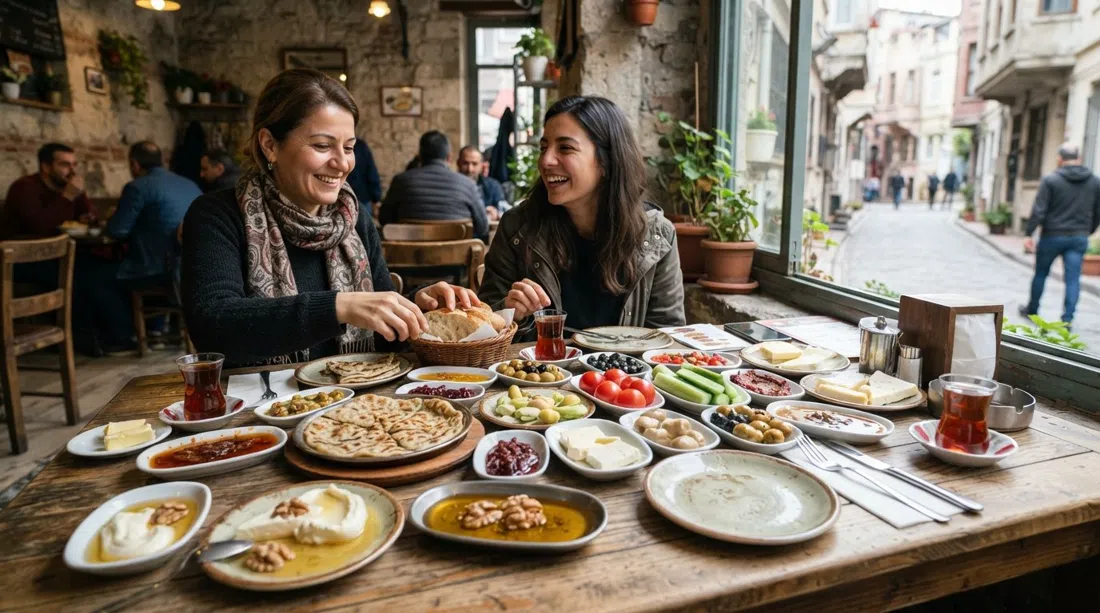
Breakfast is the local religion, and if you want to understand Cihangir, start with the line outside Van Kahvaltı Evi on Defterdar Yokuşu. This is Kurdish breakfast as a full-sentence argument: serpme kahvaltı spread across the table in dozens of little plates, from herbed Van cheeses to kaymak with honey, murtuğa — that rich flour-and-butter scramble — olives, warm bread and bottomless tea. It opens early, around 7:30am, and the pavement crowd on weekends tells you all you need to know about booking ahead. People do not come here to be efficient. They come here to settle in.
For a leafier, all-day version of the same ritual, Smyrna on Akarsu Caddesi is Cihangir’s oldest café-bar, a former antique shop that kept its faded interwar-Paris furniture and never quite stopped looking like a place where a paperback should be left face down on a table for an hour. It draws writers and expats from brunch through to late wine, and its charm is partly that it has survived long enough to become part of the neighbourhood’s furniture itself.
Come evening, the tone shifts, but only slightly. Demeti, tucked on the Cihangir slope, is the classic meyhane move: mezes, rakı and a tiny balcony with room for maybe four tables, all of them angled toward a Bosphorus view that feels almost too generous for the scale of the place. Book the balcony a couple of days ahead. There is no point pretending otherwise.
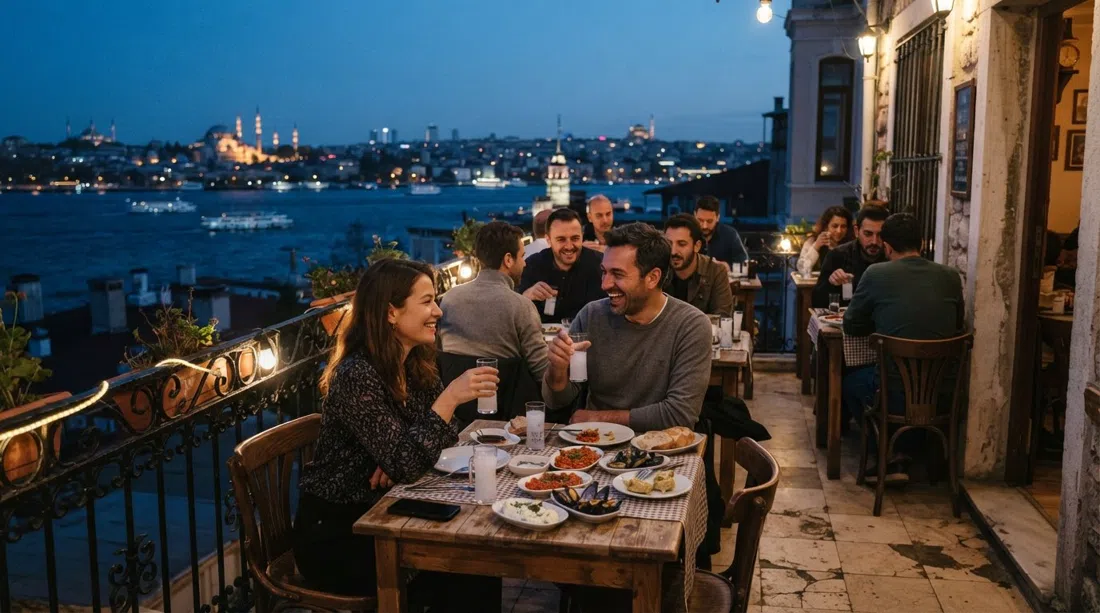
For coffee between meals, Kronotrop remains one of Istanbul’s pioneering third-wave roasters, the sort of place that actually cares how the espresso lands. It is not trying to be cute about it either. The shot is the point.
And then there is Kaktüs Cihangir on Cihangir Caddesi, which is useful in the way only a neighbourhood institution can be useful: breakfast in the morning, menemen and coffee, then beers and cocktails, then a boozy late finish around 4am. When people cannot decide what kind of night they are having, they end up here.
Prices in this quarter are higher than in much of the city — this is one of Istanbul’s pricier neighbourhoods — though still gentler than Nişantaşı. That matters less than the rhythm. Meals stretch. Coffee is not rushed. The bill arrives when the table has already turned into a small parliament.
Going out
Nobody comes to Cihangir for a megaclub, and thank God for that. The after-dark scene is bars, meyhanes and the pavements outside them, which is to say it is a neighbourhood that understands the value of standing still with a drink in hand.
Geyik Coffee Roastery & Cocktail Bar on Akarsu Yokuşu is the anchor. By day it is a specialty roaster; by night it shakes some of the city’s best cocktails, and the crowd famously spills out onto the curb with their glasses, which is half the point and all of the atmosphere. It is one of those places where the street becomes the room.
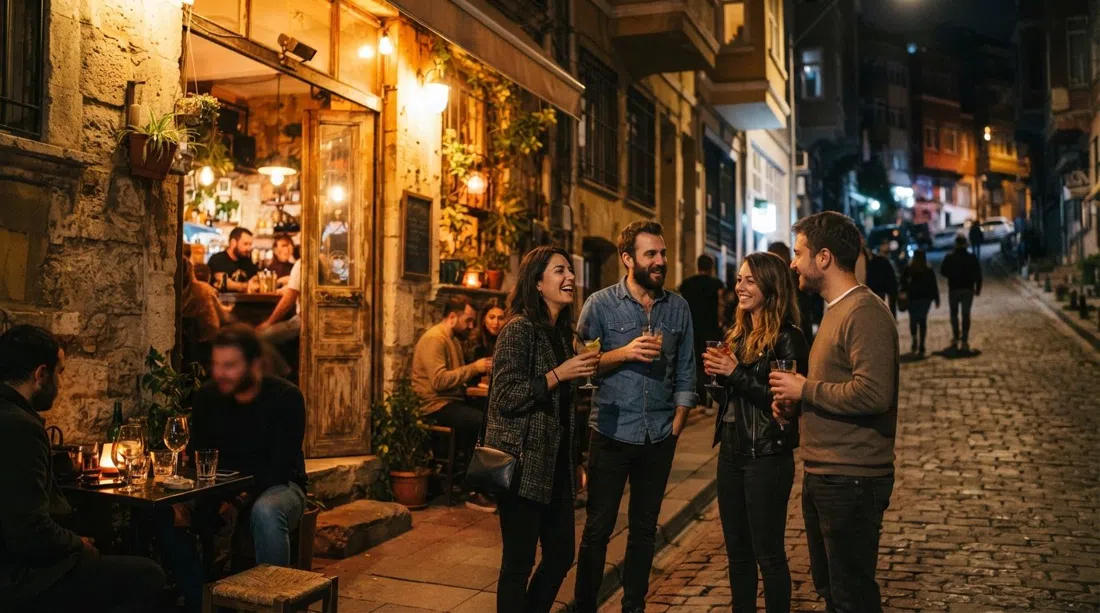
A short walk uphill on Sıraselviler, Kiki started life calling itself a gastro pub and ended up being known for house vodka cocktails — especially the mastic and pomegranate ones — plus dancing that properly gets going late on Thursday to Saturday nights. It is not subtle, but then neither is the point. Cihangir’s nights are less about destination and more about drift: one bar, then another, then a decision made by whoever is still standing.
La Cave on Sıraselviler is where you stop if the evening requires a bottle before dinner, or if you simply prefer to arrive already prepared. It is a long-established wine-and-spirits shop with a deep Turkish and international list, and in a neighbourhood that likes to act spontaneous, a little advance planning is never wasted.
By the time the streets empty, the cats have usually claimed the quieter corners. The bars do not so much close as soften.
Things to do / what to see
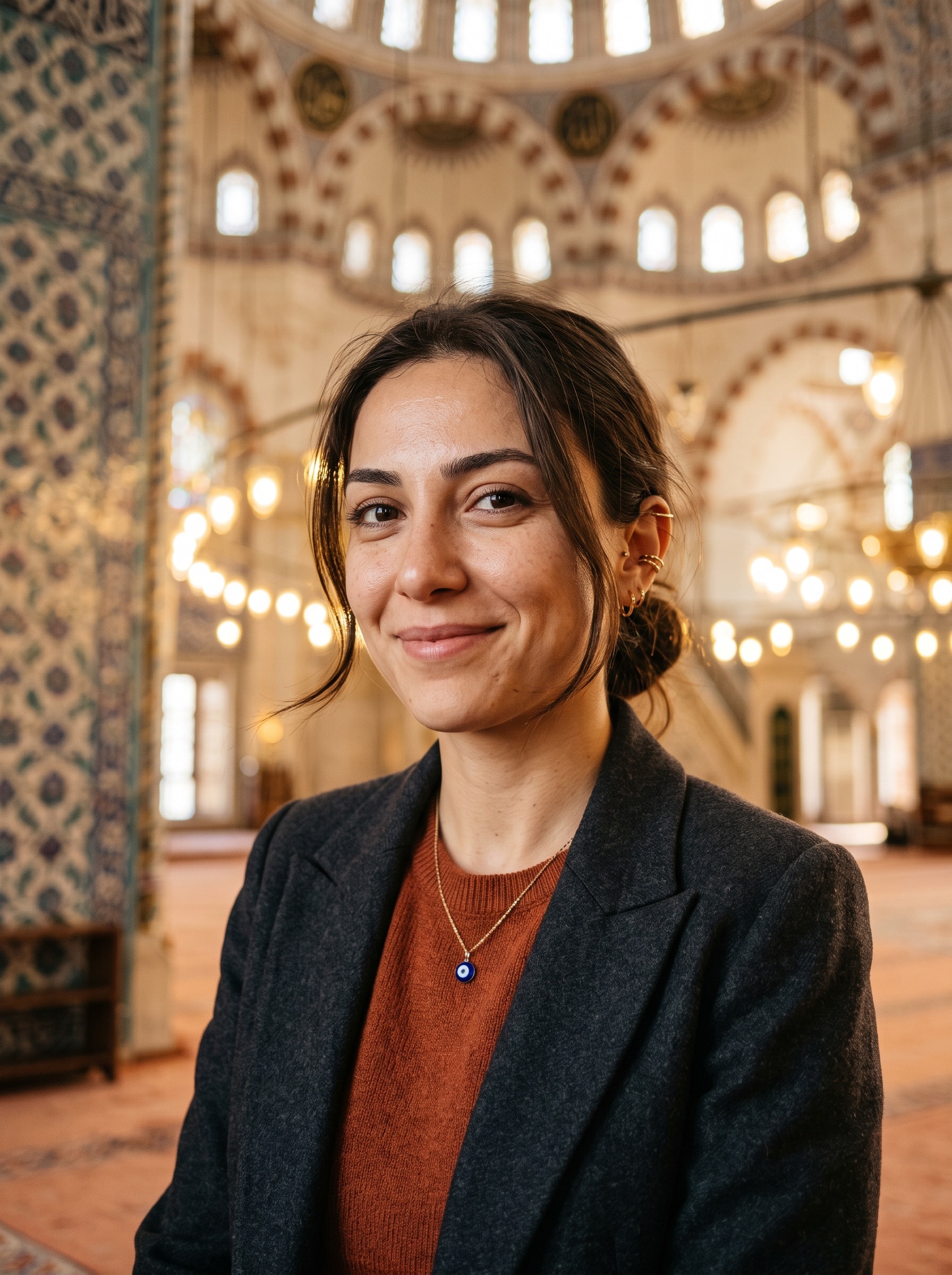
Start with the view, because it costs nothing and it is the neighbourhood’s most convincing argument. The garden terrace of Cihangir Mosque opens onto a wide sweep of the Bosphorus, the Asian shore, the historic peninsula and the Galata Tower. Go near sunset, when the water starts to look metallic and the city’s edges sharpen. The mosque itself is a nineteenth-century presence, but the terrace is the real event: a public perch where people come to stand, point, and pretend not to be impressed.
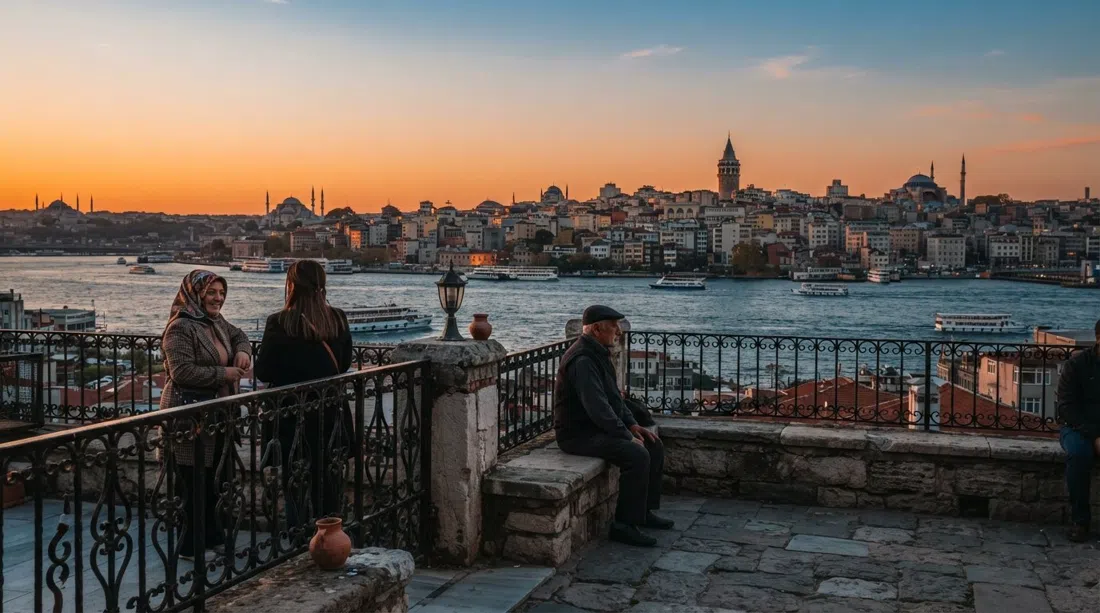
A couple of minutes downhill, Sanatkârlar Parkı gives you the same panorama from a hillside lawn with a more relaxed script. Locals bring a picnic and a beer for golden hour, and the place has the easy sociability of somewhere that does not need to perform for visitors. The view runs out over the Bosphorus and the Golden Horn, and if you are lucky the gulls will be noisy enough to drown out the conversation beside you.
Then there is the Museum of Innocence in Çukurcuma, which I would argue works even if you have never read the novel. It is a strange and moving hour: cases of ordinary Istanbul life arranged with the seriousness of a relic collection, but without the pomp. Pamuk’s eye is for the residue of living — the things people keep because they cannot quite throw them away. Matchbooks, teacups, cigarette ends. The museum is open Tuesday to Sunday, roughly 10am to 6pm, and closed on Mondays.
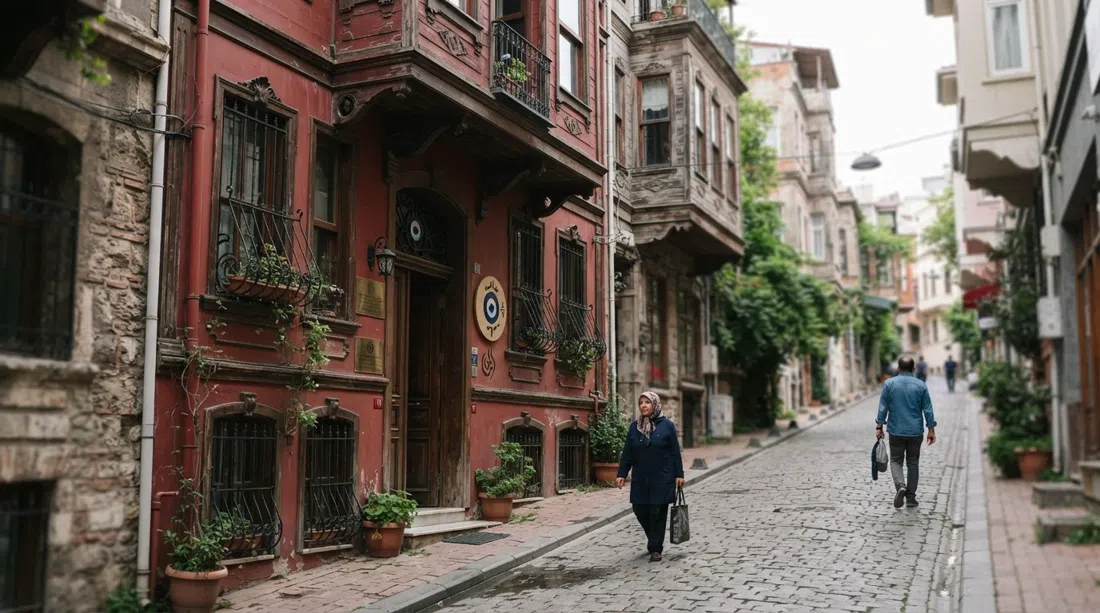
After that, the best thing to do is almost embarrassingly simple: walk. Down Faik Paşa Yokuşu, along Çukurcuma Caddesi, in and out of antique shops with no plan. The streets are too steep to hurry, too tangled for through traffic, and that is exactly why they stay quiet. You hear café chatter, the odd call to prayer from Firuzağa Mosque, and gulls over the Bosphorus, which you glimpse in slivers between buildings and, at the right angle, in full frame from the mosque terrace and the park.
If your shoulders need convincing, Çukurcuma Hamamı is there for the practical reset: a historic neighbourhood Turkish bath for a scrub and massage between antique browsing and coffee. It is the sort of place that reminds you the district is not a museum set but a working quarter with ordinary human needs.
Shopping & markets
Çukurcuma is why serious antiques hunters come to Beyoğlu at all. More than a hundred dealers squeeze into the lanes around Çukurcuma Caddesi and Faik Paşa Yokuşu, and the trick is not to rush them. Most do not fully open until late morning, so arriving at nine is a fine way to meet locked shutters and your own optimism.
The grande dame is A La Turca on Faik Paşa Yokuşu, No. 4, a four-storey nineteenth-century townhouse packed floor-to-ceiling with Anatolian carpets and kilims, Ottoman embroidery, kaftans, ceramics and furniture. Owner Erkal Aksoy has assembled what many call the richest Turkish antiques collection in the city, and browsing it is half museum visit, half treasure hunt, with the slight danger that you will leave wanting to redecorate your life.
Nearby, Galeri Alfa specialises in antique maps, engravings and its famous hand-painted lead toy soldiers of the Ottoman army. It is the sort of shop that rewards close looking; the pleasure is in the density of things and the stories they suggest.
But the real pleasure here is the drift. Dusty windows full of chandeliers and copper, crates of vinyl and old cameras, a rail of vintage coats, a tray of Ottoman-style jewellery. Prices are negotiable and quality varies wildly, so haggle gently and buy with your eyes open. This is not a place for impulsive certainty. It is a place for a slow hand and a sharper eye.
Up in Cihangir, the retail leans toward design boutiques and specialty grocers rather than antiques, which makes it a useful counterweight: a place to pick up Turkish ceramics or a bottle of local wine before heading back to your room. The neighbourhood has enough polish to be useful, but not so much that it loses its street sense.
Where to stay in Cihangir & Çukurcuma
This is a residential-feeling base rather than a hotel district, which is exactly why design-minded visitors and repeat arrivals keep choosing it. You stay among locals, a flat five-to-ten-minute walk from İstiklal and Taksim, but with a much calmer night-time pulse. The stock is small boutique hotels, guesthouses and apartment rentals rather than big-brand towers, so booking ahead in season is sensible rather than fussy.
For the calmest nights, aim for the upper Cihangir streets around Firuzağa and Akarsu. For the best light and Bosphorus glimpses, the blocks sloping down toward Çukurcuma and Tophane do the trick. The one thing to weigh is the geography: these streets are properly steep, and a room a few doors from a flatter main street will save your calves after a long day of walking, drinking coffee and pretending the hill is character building.
Budget-wise, it sits mid-to-upper for Istanbul — less than Nişantaşı or the Bosphorus villages, more than the Old City. That is part of the deal. You are paying for atmosphere, for quiet, for the ability to step out and find breakfast, antiques and a decent glass of wine without needing a taxi.
Getting around
Cihangir’s charm is also its quirk: no metro or tram runs into it, which is precisely why it stays quiet. You walk. From Taksim Square it is about a five-minute downhill stroll via Sıraselviler Caddesi, which puts you on the M2 metro and the İstiklal heritage tram — the little red one tourists photograph and locals use without ceremony.
Downhill the other way, the waterfront at Tophane and Kabataş puts you on the T1 tram, straight to Sultanahmet and the Old City in around 20 minutes, plus the Kabataş ferries and funicular. Reckon on a 10–15 minute walk down, and a stiffer climb back up. That climb is a fact of life here, not an inconvenience to be negotiated away.
For the airports, allow roughly 45–60 minutes by car or taxi to Istanbul Airport (IST) on the European side, and a similar or longer haul to Sabiha Gökçen (SAW) across on the Asian side. Everything within Cihangir and Çukurcuma is walkable, just steep. Comfortable shoes matter more here than a transit card.
The neighbourhood rewards anyone willing to move at its pace. You do not conquer Cihangir and Çukurcuma. You drift through them, stop for tea, pause for a cat, and let the hill decide how far you get before lunch.